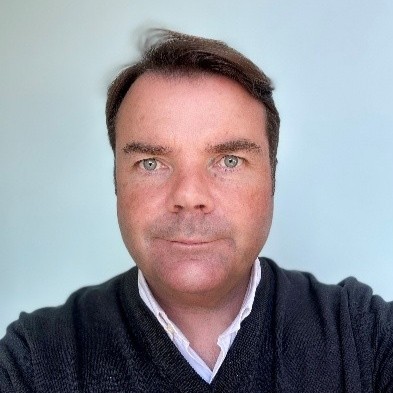
Prof. Maurice Whelan is Deputy Director of the Directorate for Health and Food of the European Commission’s Joint Research Centre (JRC) based in Italy, and head of its Systems Toxicology Unit. He also heads the JRC’s EU Reference Laboratory for alternatives to animal testing, better known as ECVAM. Maurice is a member of the OECD Advisory Group on Emerging Science for Chemicals Assessment (ESCA); a member of the Steering Committee of the European Partnership for Alternative Approaches to Animal Testing (EPAA); chair of the Regulatory Advisory Board of the European Organ-on-Chip Society (EUROoCS); and visiting Professor of Bioengineering at the University of Liverpool (UK).
Plenary lecture: Getting more out of computational modelling to benefit health and society in the EU
Abstract: The European Union has the ambition to become the global leader in life sciences by fostering an ecosystem where innovation thrives to improve lives. The EU Life Science Strategy, together with several other policy initiatives launched by the European Commission, clearly recognises the potential of computational modelling, in its various forms and contexts of use, to respond to priority needs such as tackling rare and chronic diseases, personalising care and reducing animal testing. Acknowledging that computational modelling in biomedical research and development has already come a long way, this talk asks what more can be done to increase its uptake and impact in research, industrial innovation and commercial application to benefit health and society.
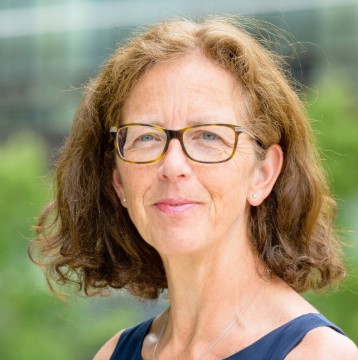
Helen Byrne is a Professor of Mathematical Biology at the University of Oxford, with over 25 years’ experience of developing mathematical models of biomedical systems. She holds a joint appointment between the University of Oxford’s Mathematical Institute and the Oxford Branch of the Ludwig Institute for Cancer Research. She has made significant contributions to mathematical oncology, publishing pioneering work on multiscale and multiphase models of tumour growth and angiogenesis. She was awarded an Advanced Research Fellowship by the UK’s Engineering and Physical Sciences Research Council (2000-2006) and the Society of Mathematical Biology’s Leah Edelstein-Keshet prize (2019), became an SMB Fellow in 2020, received an honorary doctorate from Chalmers University in Sweden in June 2024 and was awarded the London Mathematical Society’s Naylor Prize and Lectureship in Applied Mathematics in 2025.
Plenary lecture: The Tumour Microenvironment: Using Mathematics to Adapt to an Evolving Landscape
Abstract: Mathematical models are powerful tools for understanding the dynamic and heterogeneous nature of the tumour microenvironment. In this talk, I will present recent advances in mechanistic continuum–discrete and hybrid models that capture the complex interplay between tumour cells, vasculature, and immune components. Emphasising how mathematical approaches and research questions must evolve to leverage the rich, spatially resolved data generated by emerging technologies such as spatial transcriptomics, I will demonstrate strategies for integrating high-dimensional datasets with model-based parameter inference, model selection, and uncertainty quantification. Applications relating to vascular tumour growth, tumour–immune interactions, colorectal cancer and melanoma will illustrate how adaptive, data-driven modelling can generate testable predictions and inform personalised treatment strategies.
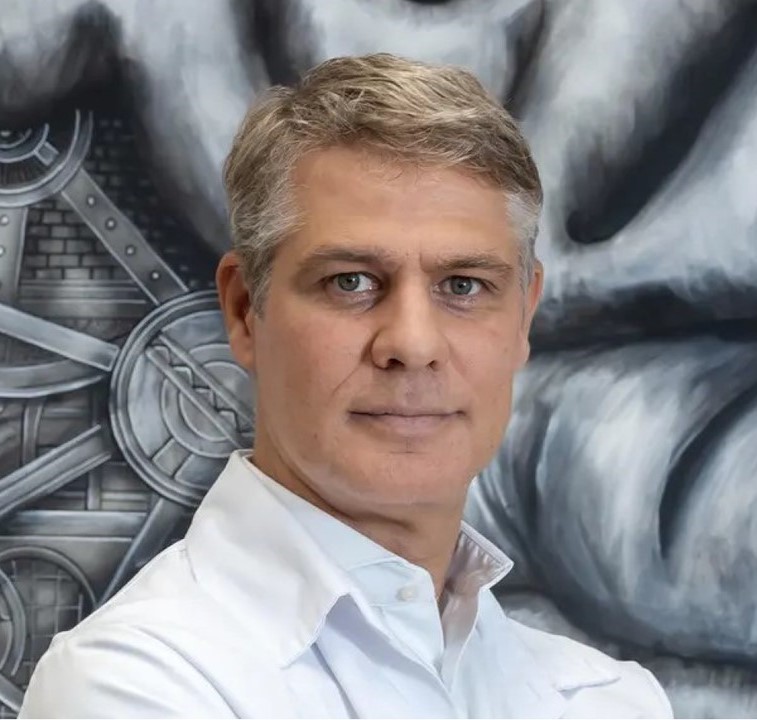
Philippe Bijlenga obtained a medical degree in Geneva in 1995, then a certificate in medical biology and a doctorate in science. He then completed his training in neurosurgery at HUG, then spent two years (2006-2008) in Cambridge, UK. On his return to the HUG Neurosurgery Department, he was successively appointed chef resident, consultant , then senior consultant. He is currently responsible for the management of neurosurgical continuing care patients, as well as the multidisciplinary management of cerebrovascular anomalies.
A specialist in intracranial aneurysms, Philippe Bijlenga has both basic science and clinical expertise. In particular, he has led projects for the follow-up of several thousand patients integrating the analysis of demographic and clinical data but also of imaging, proteomics, transcriptomics and genetics with the aim of modeling aneurysmal disease and medical decision-making. He also works on the use of virtual mixed and augmented reality in neurosurgery and collaborates in to the skull base tumor registry, while participating in the introduction of innovative methods in the follow-up of patients suffering from severe brain damage. Appointed assistant professor in the Department of Clinical Neurosciences of the Faculty of Medicine in 2018, he was appointed associate professor in October 2021.